A graph, not a list
Chapter eight of the scour book.
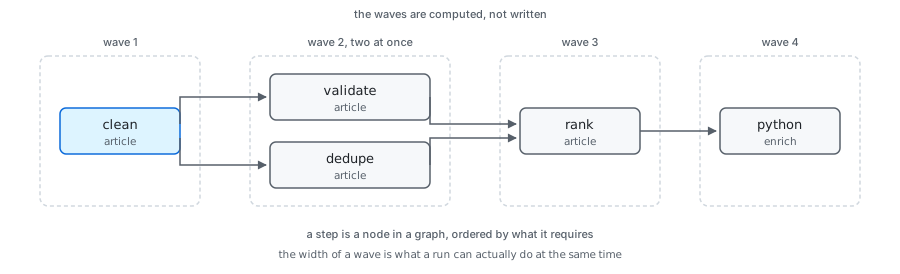
Every other stage is a chain, because a request has one path through it. The pipeline is not, because the work on an item is a dependency graph and pretending otherwise costs concurrency for nothing.
Why not an order number
A step is a node in a graph, written as step <kind> <name> and ordered by
requires. Giving it a number as well would be two ways of saying the same
thing, and they would disagree.
It would also throw away what the graph is for. The reason to know that
validate and dedupe both depend on clean and not on each other is so
they run at the same time. A list cannot express that; a number would flatten
it back into one.
pipeline {
  step "clean" "article" {}

  step "validate" "article" {
    requires = [clean.article]
  }

  step "dedupe" "article" {
    requires = [clean.article]
  }

  step "rank" "article" {
    requires = [validate.article, dedupe.article]
  }
}
References are bare, not strings, so a step requiring something that does not exist is caught with a line and a column. Cycles are refused, and the error names the steps stuck in one rather than saying that a cycle exists somewhere.
Not a plugin stage. Every other stage takes a chain of middleware; this one
does not, and the difference is not a rule a validator enforces. The pipeline
block holds step blocks and nothing else, so writing plugin in it is a parse
error with a line and a column rather than something refused later. A step is
already the unit of extension here, and a stage with two of them would be two
ways to say one thing.
| Kind | What it does | State |
|---|---|---|
clean |
Rule-driven tidying | Built |
validate |
Enforces required and types |
Built |
dedupe |
Drops items already seen | Built |
rank |
Scores and orders | Built |
entities |
Asserts what the records refer to, into the entity store | Built |
python |
Runs a Python script, inline or from a file | Catalogued |
rhai |
Runs a Rhai script, inline or from a file | Catalogued |
nodejs |
Runs a Node script, inline or from a file | Catalogued |
bash |
Runs a shell script, inline or from a file | Catalogued |
Exporters are per item
An exporter is named exporter "<format>" "<item>", and one that names an
item the job does not extract is refused. Silently writing nothing is the
failure mode nobody notices until they go looking for the output.
exporter "parquet" "price" {
  dir = "./archive"
}

exporter "nats" "price" {
  subject = "events.markets.price"
}
There is no archive component and no event component. Saving to storage and streaming to a stream are both deliveries, so both are exporters. The same item, declared once, is written as Parquet for whatever reads the archive and published as a measurement for whatever is listening now.
What that buys
Parquet on disk is a table without a database: DuckDB reads it in place, and so does anything else that speaks the format. An archive that needs a running service to be readable is an archive with an expiry date.
Back: Shapes, entities, measurements · Next: Local until it has to be shared